Book Wizard: Science Fiction Books 5-8

About

This exciting genre of books focuses on speculations on science or technology. They may be set far in the future or perhaps in some advanced alternate reality. The plot may revolve around the use of high-tech tools or techniques to solve the problem. Or the book may be scientific speculation on the results of some event.


“The Other Side of the Island,” by Allegra Goodman

In this exciting science fiction fantasy the world environment has been ruined. The ocean has risen, wiping out whole continents and leaving small islands for people to live on.

Young Honor and her family live on island 365, a place where The Corporation controls everything, and those who don't submit are turned into human robot slaves.


“Found,” by Margaret Peterson Haddix

Thirteen years ago an unscheduled plane pulled up at the jetway of Sky Trails Air. Airport workers discovered that the plane was full of crying infants, and yet there were no pilots or crew on board. Once the babies were removed the plane disappeared without a trace. Now, thirteen years later, these children are teenagers, living with adoptive parents. Little do the teens know, but they will soon have to face their strange past again.


“Code Orange,” by Caroline B. Cooney

It starts as a simple science project. Mitty has to write a research paper about an infectious disease. His chosen topic is smallpox.

But in one of his old research books Mitty finds an envelope full of smallpox scabs. He opens it, not realizing that he may be exposing himself to a deadly disease that killed hundreds of thousands of people in the past. Suddenly Mitty finds his science project to be considerably more exciting than he had originally thought.


“A Swiftly Tilting Planet” by Madeline L’Engle

In this unusual science fiction fantasy story young genius Charles Murray travels back in time to prevent a nuclear disaster from destroying the Earth.

In the process he explores the deeply rooted struggle between good and evil. He must travel thousands of years back in time to correct numerous hatreds and evils with the power of love. And if he doesn't do it correctly, then there may be no future to return to.


Inkweaver Review 2009-04-30T14:53:00-05:00

“Jellicoe Road,” by Melina Marchetta

Book Cover Art for Jellicoe Road by Melina Marchetta“Jellicoe Road,” by Melina Marchetta is a very unusual book about the parallels between the lives of two groups of children, and the effect that their decisions and the unique place called Jellicoe Road has on them. The complex social interactions, foreshadowing, and strange clues in the story makes the it slightly difficult to understand, especially at first, but it gives the novel a powerful effect.

The main character is Taylor Markham, a seventeen year old girl who was abandoned by her mother at a gas station on Jellicoe Road when she was eleven. Fortunately she was found by a family friend named Hannah and taken to live at Jellicoe School, a selective state run school for clever children with troubled pasts.

Inkweaver Review is currently in the process of moving. Please read the rest of this review at its new location:

Review of "Jellicoe Road" by Melina Marchetta
Inkweaver Review 2009-04-29T14:11:00-05:00

“The Other Side of the Island,” by Allegra Goodman

Book Cover Art for The Other Side of the Island by Allegra Goodman“The Other Side of the Island,” by Allegra Goodman is a dystopian style science fiction novel about a girl living in a future time when humans have started enclosing areas of the Earth as a way of dealing with the ruined environment.

Honor and her family have always been slightly eccentric. Although they live on Island 365 in the Tranquil Sea, Honor can sometimes remember a time when they lived somewhere else: somewhere where it snowed and the islands were not enclosed, but open to the sky.

Inkweaver Review is moving to a new web address. Please read the rest of this review at its new location:

Review of "The Other Side of the Island" by Allegra Goodman
Inkweaver Review 2009-04-28T12:23:00-05:00

Interview with Author Susan Beth Pfeffer

About Susan Beth Pfeffer
Picture of author Susan Beth Pfeffer
Born in New York City, and raised on Long Island, Susan Beth Pfeffer moved to Middletown, NY immediately following the publicaton of her first children's book, Just Morgan, and continued to live there as she wrote another 74 books for kids and teens.

Among her many titles are Kid Power (winner of the Dorothy Canfield Fisher Award and the Sequoyah Children's Book Award), About David (winner of the South Carolina Young Adult Book Award), The Year Without Michael (also winner of the South Carolina Young Adult Book Award and selected as one of the American Library Association 100 best books for young adults published in a 25 year period), and the popular Portraits Of Little Women series.

In the winter of 2005, having nothing better to do, Susan wrote the manuscript that became her 74th book, Life As We Knew It. After 40 years, she became an overnight sensation. Life As We Knew It was her first New York Times best selling title. It was named the young adult selection for One Book New Jersey 2009, and won the 2009 Garden State Teen Book Award. It is also the first winner of the Truman Readers Award.

Following the success of Life As We Knew It, Susan has written a companion novel, The Dead And The Gone, writing about the same natural catastrophe that is the backdrop for the first book, while focusing on completely different characters. The third book of the trilogy, and Susan's 76th title, This World We Live In, is scheduled for publication in spring of 2010.

Inkweaver Review is moving to a new web address. Please read the rest of this interview at its new location:

Interview with Author Susan Beth Pfeffer
Inkweaver Review 2009-04-27T09:04:00-05:00

“Found,” by Margaret Peterson Haddix

Book Cover Art for Found by Margaret Peterson Haddix“Found,” by Margaret Peterson Haddix is book one of “The Missing” series, a science fiction fantasy about a group of children who discover that they have been stolen from various time periods using advanced time travel technology.

Thirteen years ago a plane full of infants landed at jetway of Sky Trails Air. There was no pilot of flight crew on board, and after the babies were removed from the plane it disappeared. Careful scrutiny of the flight records indicated that the plane had never landed. Even the radar records show nothing at all.

Thank you for visiting Inkweaver Review. We are currently in the process of moving to a new web address, so please read the rest of this review at our new website:

Review of "Found" by Margaret Peterson Haddix

Other Great Books by Margaret Peterson Haddix:


Inkweaver Review 2009-04-27T08:31:00-05:00

“Emmy and the Home for Troubled Girls,” by Lynne Jonell

Book Cover Art for Emmy and the Home for Troubled Girls by Lynne Jonell“Emmy and the Home for Troubled Girls,” by Lynne Jonell is a delightful book about a young girl named Emmy and her adventures with a group of intelligent rats that have mysterious powers. This book is the second in a series that began with “Emmy and the Incredible Shrinking Rat.”

When Emmy first met Raston, he was a sulky and obnoxious classroom pet that liked to bite. But the first time Emmy was bitten by Raston she discovered an amazing thing about Raston: people who are bit by the rat can understand Rat speech.

Inkweaver Review is moving to a new web address. Please read the rest of this review at its new location:

Review of "Emmy and the Home for Troubled Girls," by Lynne Jonell.
Inkweaver Review 2009-04-26T14:36:00-05:00

“The Tale of the Swamp Rat,” by Carter Crocker

“The Tale of the Swamp Rat,” by Carter Crocker is a novel about a young rat born during a drought that threatens life in his swamp.

Book Cover Art for The Tale of the Swamp Rat by Carter CrockerWhen Ossie was born his parents and siblings immediately noticed that he was a little different. Not only was Ossie, “not much for talking,” but he also seemed to daydream a lot. But when Ossie's family is eaten by the feared rattlesnake Mr. Took, Ossie is the only one to escape. Alone and afraid, Ossie quickly discovers that in the real world life is dangerous for a young rat.

But then Ossie meets Uncle Will, an age old alligator that seems to have been around as long as the swamp itself. Uncle Will starts watching over Ossie, and soon this unlikely pair are exploring the swamp, with Ossie riding on the old alligator's back.

But troubling times are ahead in the swamp, because a drought has arrived, and the waters of the swamp are slowly drying up. With less and less water to go around the swamp creatures are getting more and more cantankerous. When a shifty stork named Prophet Bubba claims that he can explain why the swamp is drying up, the swamp animals are eager to listen. But Uncle Will and Ossie know that this self proclaimed prophet has his own agenda. First he says that all birds must stop flying because their beating winds are blowing away the clouds. Then Prophet Bubba claims that the swamp is drying up because the mud turtles are digging their burrows too deep and letting the water out. Needless to say, none of Prophet Bubba's solutions work, but the gullible creatures of the swamp all believe him. But then Prophet Bubba says the drought is Ossie's fault.

Carter Crocker has done a great job in writing “The Tale of the Swamp Rat.” The storyline is carefully developed, flowing as smoothly as swamp water itself. The story is told in a unique voice that captures the very essence of the swamp. The animal characters in “The Tale of the Swamp Rat” are beautifully rendered. From the small lovable creatures like Ossie and his young friends, to the evil animals like Mr. Took and Prophet Bubba, Carter Crocker breathes life into his creations with great care. I feel that all young people will enjoy reading “The Tale of the Swamp Rat.”

Inkweaver Book Rating:

Plot

Characters

Presentation

★★★★Overall

Inkweaver Review 2009-04-25T11:00:00-05:00

“Virus Hunter” by C. J. Peters

“Virus Hunter” by C. J. Peters is a thrilling autobiography about its author’s thirty year career fighting dangerous viruses around the world. The book was coauthored by Mark Olshaker.Book Cover Art for Virus Hunter by C. J. Peters

The overwhelming theme of “Virus Hunter” is the need to be extremely careful when dealing with infectious diseases. C. J. Peter’s introduces an old medical adage: “Common things occur commonly. Uncommon things don’t. Therefore, when you hear hoofbeats, think horses, not zebras.” However, in the field of disease research and control you have to assume that the hoofbeats are those of zebras, or pay the penalty for underestimating the danger that could be present.

The very first chapter, entitled “The Killer Without a Name” sets the the pattern for the rest of the book. C. J. Peters does an amazing job of showing the tension, fear, and danger associated with virus outbreaks. First he shows what such an epidemic is like from point of view of someone living in the area:

One day you child, your parent, your spouse, or your lover—the person your cherish most in the world—is vigorous and healthy and full of life. Then he or she comes down the a headache, some fever and body aches, his or her chest feels heavy, breathing becomes labored. They complain of vague symptoms that get worse and worse. Sometime later, they collapse.

Twenty-four hours later, they’re dead.

Then C. J. Peters moves on to show the point of view of the medical community. The doctors discouraged by their apparent inability to keep their patients alive. In some cases they are overwhelmed by scores of sick people and others who are afraid that they might be sick. Then the disease starts killing nurses and doctors.

The hospitals themselves become dangerous places because they are filled with sick and dying people. The rest of the general populace sees the inadequacy of the hospitals and doctors and so they stop taking their relatives there, choosing instead to try to treat them at home.

Peters has worked in this kind of atmosphere for thirty years. He describes the way that he has had to deal with the press, doctors, and anguished patients. Since many such dangerous outbreaks occur in third world countries, C. J. Peters also describes the way the local economy and local culture affect the way the CDC and other research teams have to deal with people.

It is also highly dangerous to work in the research facilities that handle infectious diseases. C. J. Peters describes trying to save the life of a colleague who cuts himself with a scalpel while performing an autopsy. He shows healthy doctors who break down, sure that they have the disease themselves. Time and again, he demonstrates how even the most expensive high-tech research lab is only as safe as the procedures and attention to detail shown by the people who work in it.

“Virus Hunter” is extremely detailed, and its passages are both exciting and informative. This is an adult book, however. Not only does it include rather graphic medical descriptions of the effects of some diseases, but C. J. Peters makes occasional use of profanity. This language is the only thing that I regret about the presentation of “Virus Hunter.”

Overall, I would definitely recommend “Virus Hunter” as an exciting educational book on infectious disease.

Inkweaver Book Rating:

Focus

Interest Level

Presentation

★★★★Overall

Inkweaver Review 2009-04-24T09:32:00-05:00

Book Wizard: Science Fiction Books 1-4

About

This exciting genre of books focuses on speculations on science or technology. They may be set far in the future or perhaps in some advanced alternate reality. The plot may revolve around the use of high-tech tools or techniques to solve the problem. Or the book may be scientific speculation on the results of some event.


“The Dead & The Gone,” by Susan Beth Pfeffer

In this thrilling piece of speculative fiction a giant asteroid hits the moon, jarring it into a new orbit closer to Earth. Dramatic climate changes result for the Earth, and panic and looting run rampant.

Seventeen-year-old Alex Morales must try to keep himself and his two sisters alive through the terrible disaster.


“The Adoration of Jenna Fox,” by Mary E. Pearson

Seventeen-year-old Jenna awakes from a coma to find herself completely changed. In her time advanced medical technology has allowed scientists to replace damaged body parts with biotechnology. Jenna was involved in a deadly car accident, and only 10% of her real brain and a few tissue samples were salvaged. The rest of Jenna's body was reconstructed using nanotechnology and electronics. Jenna must face the question of whether she is human or just a digital continuation of a girl who really died.


“Atherton – The House of Power,” by Patrick Carman

In this amazing science fiction fantasy readers are introduced to the world of Atherton. Atherton was created by a mad scientist to serve as a new refuge for humans who wanted to escape the ruined, polluted environment of Earth.

But now the world is changing in mysterious ways, and only one person can understand what is happening: the scientist who created Atherton.


“Atherton – Rivers of Fire,” by Patrick Carman

This exciting sequel to "Atherton - The House of Power" continues the adventure.

In search of answers about his word daring young Edgar travels into the depths of Atherton. Here intricate processes take place, designed to keep the world of Atherton alive. But for Edgar, they are nothing but danger.


Inkweaver Review 2009-04-23T14:21:00-05:00

“A Study in Scarlet,” by Sir Arthur Conan Doyle

“A Study in Scarlet,” by Sir Arthur Conan Doyle is a fascinating detective mystery story that introduces Sherlock Holmes to the world.Cover Art for A Study in Scarlet by Sir Arthur Conan Doyle

The story starts by introducing John H. Watson, an army doctor recently returned to London after a disastrous tour in India. Watson is happy to be in London again, but he soon finds that he needs better quarters. Unfortunately, his income is so low that he can not afford anything decent.

Through a friend Watson is introduced to Sherlock Holmes, who has found a comfortable apartment but needs someone to share the rent with. At first Watson is a little bit skeptical about Holmes, who seems to be a very eccentric individual indeed, but when Watson visits the apartment that Holmes wants to rent, he decides that he might as well try it out.

Soon Watson and Holmes have moved into their apartment on Baker Street. From the very start Watson finds himself wondering about Holmes. For one thing Holmes doesn’t seem to have any regular employment, and he has a very strange system of knowledge and study.

After a few failed attempts, Sherlock Holmes himself tells Watson of his career. He is a “consulting detective.” When the police and Scotland Yard are unable to solve a mystery or catch a criminal, they contact Holmes, who uses scientific principals to shed new light on the mystery or track down the culprit.

Soon enough Holmes has a chance to demonstrate his skill. When a murdered man is found in an empty building nearby the police are baffled. The murdered victim has no wound on his body, yet the room is marked with blood. In addition, none of the victims personal possessions were stolen, his money and various other valuables are untouched.

Sherlock Holmes agrees to take the case. When he arrives at the seen of the crime, however, the whole matter seems to get even more complicated, rather than clearing up. First a woman’s wedding ring is discovered on the floor beneath the dead body. Then the word “Rache” is discovered written on the wall with blood.

Sherlock Holmes’ investigation will uncover events that began decades ago in America. The crime is a deadly revenge plot that has taken decades to come to culmination. The daring and persistent perpetrator is a determined person though, and it will take careful panning on Holmes part to capture him.

“A Study in Scarlet” was first published in 1887. This classic story is a good introduction to Doyle’s character Sherlock Holmes. Unfortunately, in this book Doyle shows Holmes in a slightly unflattering light, portraying him as proud and angry that he doesn’t get enough recognition for his skill. Other than that “A Study in Scarlet” is a great mystery story. The plot is realistic and reasonably unusual.

All mystery lovers should read the classic “A Study in Scarlet.”

Inkweaver Book Rating:

Plot

Characters

Presentation

★★★★★Overall

Inkweaver Review 2009-04-23T10:55:00-05:00

Book Wizard: Realistic Fiction Books 5-8

About

Realistic fiction uses made-up characters, but their actions and problems are realistic in that they are something that could occur to us. Some realistic fiction books deal with a death in the family or some other real traumatic event that the character must deal with. Also included in this genre is the classic "coming of age" story, which focuses on how a real event helps a character to grow up or mature.


“The Beloved Dearly,” by Doug Cooney

Twelve-year-old Ernie has always liked making money. But other people never seem to appreciate his business ventures.

But then Ernie comes up with the ultimate business: pet burial. It starts out great. But soon Ernie realizes that profits aren't the only thing to worry about. Friendship and real compassion for the grieving are also important.


“Trigger,” by Susan Vaught

This innovative book is written from the point of view of a boy who is brain damaged from a failed suicide attempt that erased much of his memory.

The therapy people have given him a notebook in which he can keep his memories, but it can't answer the nagging question of why he tried to kill himself. At the same time he has to deal with the reactions of other people to his suicide attempt and his disability.


“The Secret Rites of Social Butterflies,” by Lizabeth Zindel

When Maggie and her Mom move to a new school district Maggie is afraid that she won't be able to find any new friends.

But soon after going to her new school Maggie is accepted into a secret school clique called the Revelers. Maggie is thrilled to have friends, but she is slightly worried about the Revelers and their strange purpose, which seems to be to keep track of all the school secrets on a vast chart that they call The Wall.


“Sahara Special,” by Esme Raji Codell

Sahara Jones is a young girl who has two files. One is her school file that contains all the worried notes from teachers and assessments by counselors. The other is her secret writing file, which she keeps hidden behind the books at the local library.

When a new teacher arrives to teach Sahara's class she helps Sahara to develop personally and open her secret file to others.


Inkweaver Review 2009-04-23T09:52:00-05:00

Book Wizard: Realistic Fiction Books 1-4

About

Realistic fiction uses made-up characters, but their actions and problems are realistic in that they are something that could occur to us. Some realistic fiction books deal with a death in the family or some other real traumatic event that the character must deal with. Also included in this genre is the classic "coming of age" story, which focuses on how a real event helps a character to grow up or mature.


“Kira-Kira,” by Cynthia Kadohata

As sisters Katie Takeshima and her older sister Lynn enjoy a special relationship. Katie looks up to her older sister, because she seems so smart. Lynn helps Katie to find the "kira-kira" the special things all around in the world.

But then Lynn gets lymphoma. In the face of medical bills and Lynn's declining health it is harder and harder to find "kira-kira."


“Becoming Naomi León,” by Pam Munoz Ryan

Naomi León has lived with her grandmother for most of her life, ever since her real mother abandoned her. Naomi loves her grandmother, but she has always wondered why her mother didn't want her.

Then Naomi's mother returns. She has changed her name, and now she wants to change Naomi's life. She wants to separate her from her mentally disabled brother and take her away to live with her, but Naomi is afraid of her mother.


“Waiting for Normal”, by Leslie Connor

After her parent's separation Addie ended up living with her mother. She misses her step sisters, who are now living with her father, but she also doesn't want to leave her mother.

But Addie's mother sometimes leaves for days on end. Addie knows such neglect is not a normal family life and she wishes that she could live with her step father.


“Ruby Holler,” by Sharon Creech

Twin orphans Dallas and Florida have never been able to find a home. They end up getting sent back by everyone who offers to take them. The twins start to think of themselves as troublemakers that no one wants.

But then an older couple offers to take them to live with them in their old home in a beautiful place called Ruby Holler.


Inkweaver Review 2009-04-23T09:28:00-05:00

“The Mystery of the Third Lucretia,” by Susan Runholt

Book Cover Art for The Mystery of the Third Lucretia by Susan Runholt“The Mystery of the Third Lucretia,” by Susan Runholt is an enjoyable mystery about two daring teenage girls who uncover a multi-million dollar international art crime.

Fourteen-year-old Kari and her best friend Lucas have been friends for years. When Kari and Lucas get a chance to go to London with Kari's mom, who is an international writer and photographer for The Scene magazine, the two girls don't realize that their trip is going to turn into a full scale mystery.

Inkweaver Review is moving to a new website. Please read the rest of this review at its new location:

Review of “The Mystery of the Third Lucretia,” by Susan Runholt
Inkweaver Review 2009-04-22T17:33:00-05:00

“Daydreams in Mermaid Grass,” by Natalie Williams

“Daydreams in Mermaid Grass,” is a good collection of powerful, descriptive poetry written by Natalie Williams.

In Natalie Williams’s own words “Daydreams in Mermaid Grass” is “a collection of tales, legends, stories, dreams and nightmares in poetry.” The entire tone of the collection is one of epic fantasy, and dark dream imagery. Many of the poems in the collection reminded me of the tone of Lord Tennyson’s lyric epics, though Natalie William’s voice is much looser with more touches of the modern world to keep the reader grounded from a more familiar viewpoint. This voice that is both ancient and modern is very well balanced I feel.

The poetry in this collection is very modern in form, making use of both internal and external rhyming schemes. These rhyming schemes sometimes flow freely, but at other times they seem slightly forced or awkward. For example, in her poem “Ravens Can’t Sing” Natalie Williams begins with the lines:
When I woke up this morning it was winter
And before it was spring
Robins are now ravens
Ravens can’t sing
Dandelions painted daylight with gold
Now with ice and snow coloured cold
The first four lines flow through the reader’s mind very smoothly, and the thoughts follow a wonderful natural progression. Even the last two lines, though slightly less enjoyable are still well formed, even if the rhymes seem slightly forced. Farther on, however, the poem seems to deteriorate in quality, mirroring the gradual images of degeneration that fill this poem.
When I woke up this morning in a long dream waking
As the dawn was breaking
I seemed to be taking
Too long or too shy
To be taking a leak
Now riddled and weak
As winter, relief seemed bleak
The following lines seem much more awkward, as if the content was sacrificed so that the poem could stick to the artificial rhyming scheme. In my opinion the use of three or four rhyming lines in a row makes it much harder to create a poem that is still emotionally relevant. In the end, my overall reaction to “Ravens Can’t Sing” was that it could have been a fantastic poem, but instead it was just an average one.

This experience was repeated many times as I read “Daydreams in Mermaid Grass.” Some of the poems are really good, but they have small flaws or rough portions. Instead of being wonderful they left me feeling mildly disappointed.

The one thing that motivated me to continue reading the collection was the extraordinary subject matter and focus of “Daydreams in Mermaid Grass.” The poem themes are well designed and each is attention grabbing in its own way. One of my favorites was “The Mockingbird and the Jewelfinder,” a poem full off beautiful imagery about precious jewels and song.

All considered I would say “Daydreams in Mermaid Grass” is a good poetry collection that could have been great. I would definitely look for future poetry from Natalie Williams.

Inkweaver Rating:

Voice

Theme

Presentation

★★★Overall

Inkweaver Review 2009-04-22T16:08:00-05:00

Inkweaver Review Book Wizard


The Inkweaver Review Book Wizard is here to help you find a great book. There are some books that you remember for the rest of your life. Hopefully you will find one here.

To get started you must choose a genre of literature that appeals to you. Books usually fall into neat categories of similarities. If you like one book from a category there is a possibility that you will enjoy more books like it.

Realistic Fiction

Realistic fiction uses made-up characters, but their actions and problems are realistic in that they are something that could occur to us. Some realistic fiction books deal with a death in the family or some other real traumatic event that the character must deal with. Also included in this genre is the classic "coming of age" story, which focuses on how a real event helps a character to grow up or mature.

Science Fiction Books

This exciting genre of books focuses on speculations on science or technology. They may be set far in the future or perhaps in some advanced alternate reality. Typically the plot revolves around the use of high-tech tools or techniques to solve the problem. Or the book may be scientific speculation on the results of some event.

Historical Fiction Books

These books aim to make history come alive. They show real past events in a whole new way by putting readers in the point of view of a character experiencing history first hand. Many of these books contain wonderful descriptions of life in the past or of the hidden workings that were behind historic moments.

Fantasy Books

This genre is best known for Medievalist tales in the Tolkien style. However, a major characteristic of Fantasy is that although it may draw on real world elements it is usually set in a fantastic world quite unlike our own. Fantasy is all about possibilities and escapism to a different world or setting.

Mystery Books

This books focus on either crime or problem solving. In the crime mystery a professional or intelligent amateur puts themselves in danger's way to unravel a crime and catch the perpetrator. The problem solving type of mystery usually involves a mysterious map or difficult series of clues that lead up to some hidden treasure or valuable.

Animal Books

These books are frequently funny, sometimes sad. Animal books are distinguished from other genres because animals play major roles in the storyline. These stories may focus on the relationship between a person and their pet, or they might go so far as to make an animal a sentient, thinking character. In some of these books animals can even talk!

Utopian/Dystopian Books

This genre of books focuses on the society and culture of the future. In Utopian books society has reached a point where all problems seem to have been solved. But then an inquisitive character discovers a concealed secret about the world he lives in. In Dystopian books the world has been completely ruined. Perhaps the environment has been destroyed or the world is ruled by an authoritarian government that denies people basic rights. The characters in these books must fight to survive in their dangerously unstable world.

Non-Fiction

These books are about real life. They are usually designed to teach about the world that we live in or the people that live in our world. Some may be historically based, others may focus on things that are occuring today. Some non-fiction books are autobiography's about the lifes of famous figures. Non-fiction books may even conjecture about the future of our existence.
Inkweaver Review 2009-04-21T14:41:00-05:00

Critical Analysis: “The Red Pony,” by John Steinbeck

Book Cover Art for The Red Pony by John Steinbeck“The Red Pony,” by John Steinbeck is a classic story about an immature young boy faced with the realities of birth and death. Although “The Red Pony” may at first glance appear to be a light tale for young readers, it is actually considerably deeper in application and scope, dealing with feelings of rage, sorrow, and futility. A particularly interesting aspect of “The Red Pony” is John Steinbeck's use of incompletion to add depth and feeling to the stories.

The Gift

The main character of “The Red Pony” is Jody Tiflin, a ten year old boy with “hair like dusty yellow grass and shy polite gray eyes.”

Inkweaver Review is moving to a new web address. Please read the rest of this critical analysis paper at its new location:

Critical Analysis of "The Red Pony" by John Steinbeck
Inkweaver Review 2009-04-21T10:09:00-05:00

Improved Random Post Link Widget for Blogger

The complete instructions and new code for the random post link have been moved to Experiment Garden. Instructions in this post may be outdated, so please see the new version.

The random post link addon for Blogger has now been updated to better and faster than ever before.

Basically this script creates a text link to a random post on your blog. It displays the random post's title as well as a brief random message to accompany it.

The major changes between this updated version and the current version are:

The addon no longer requires the Archive Widget to be added to your page.
The code is no longer limited to displaying posts from the past three months. It can now give you links to posts from your blog's entire history.

You can see the code in action at the top of the post area here at Inkweaver Review. Just refresh the page a few times to see a variety of random links to posts I've written in the past.

Removing Inkweaver Review Advertisment

You may notice that about one out of every ten random links is not to a blog post but back to Inkweaver Review. I would appreciate it if you left this, as it shows appreciation for the time and effort that I went to to create this script. However, you may not like the effect. There are two options you might want to take.

First, you can make the advertisement appear less often by simply adding more of your own custom messages to the list of random messages.

Find the section of code:
var introArray = new Array(
"Have you read ^?",
"Check out ^.",
"Look at ^.",
"Just for you: ^",
"Please look at ^.",
"Would you like to read ^?",
"You might enjoy reading ^.",
"Do you want to read ^?",
"Please read ^.",
"Random link powered by <a href="http://inkweaver-review.blogspot.com/"></a>"
)

To add another message just copy one of the lines in the middle, and paste it again in the middle. If you want to customize the message, just keep in mine that the caret "^" is where the random link is inserted.

If you want to remove the link back to Inkweaver Review completely, just remove the last message in the list. After you remove this message, be sure to remove the comma at the end of the new last message. If you remove the link back to Inkweaver Review then please add another link somewhere. Perhaps add me to your blogroll, or else write a post about the addon with a link to this page.

Limiting Number of Posts Used

Another customization that you may want to do is limiting the number of posts that the script can choose from. As it is the script will display links to any of your posts up to the 99999th post. You may want to limit it to the last 100-200 posts for several reasons. For one thing your oldest posts might be out of date, or their writing quality might not be as good as your new posts. But another reason why you might want to reduce the number of posts is load time. Loading a list of all the posts you have ever written on the blog can be time intensive for older blogs. So to reduce the number of posts that the script will choose from find the number 99999 in the code that you added to the XML template and change it to a smaller number. For example, the number 100 will limit the results to the last 100 posts that you have written.

I sincerely hope that this Blogger addon can be of help to you. If you encounter any issues please let me know by commenting here, and I will do my best to get back to you as soon as possible.
Inkweaver Review 2009-04-20T15:42:00-05:00

“Knights & Castles,” by Philip Dixon

“Knights & Castles,” by Philip Dixon is part of “Insiders”, a fabulous educational series for young readers. The Insiders series uses vivid three dimensional computer graphics to depict scenes and historical events. These 3D renderings add amazing life to the informative text.

“Knights & Castles” begins by introducing the concepts of knights and castles. First it shows how knights fit into the medieval social caste system. A complex image shows the interactions and relationships between such medieval figures as the pope, king, bishops, barons, knights, and peasants.

The next major highlight of the book is an amazing two page spread showing the start of a medieval battle. The accompanying notes explain common battle strategies used to defeat the enemy. One thing that I appreciated about Insider's “Knights and Castles” is that it depicts battle and fighting without getting gory or excessively violent.

Page 16 of “Knights & Castles” shows a castle from above and explains what different buildings in medieval castles were used for. One fact that I really appreciated on this page had to do with the way spiral staircases in medieval castles were built to make it easy for a right handed defender to defeat enemies coming up the steps.

For readers who have ever wondered how medieval castles were built, pages 20 and 21 show and amazing construction scene. From initial stone preparation by the masons to the construction of the walls, “Knights & Castles” explains how castles were built.

After these broad scale views of castle life the book starts focusing on life inside the castle. It shows how medieval banquets appeared, and explains the process of becoming a k night. One of my favorite parts of the book shows a medieval field during each of the four seasons. Peasants did different types of work during each time of the year.

The last portions of “Knights & Castles” show different famous castles such as The Tower of London, Krak des Chevaliers, Castel del Monte, Caerphilly, and Mont-Saint-Michel.

I highly recommend Insiders' “Knights & Castles” to all young readers. The accurate details and fascinating images are instructive and fun to read at the same time.

Inkweaver Book Rating:

Details

Pictures

Presentation

★★★★Overall
Inkweaver Review 2009-04-20T12:27:00-05:00

“Our White House, Looking In, Looking Out”

“Our White House, Looking In, Looking Out” is a fascinating collection of stories, historical passages, and art about the United States White House. This collection was created by over 108 renowned authors and illustrators under the guidance of the National Children's Book and Literacy Alliance.
Book Cover Art for Our White House, Looking In, Looking Out
One of the first things that interested me about “Our White House, Looking In, Looking Out” was the impressive line up of contributing authors and artists, among them Natalie Babbitt, Jean Craighead George, Susan Cooper, Kate DiCamillo, Linda Sue Park, Richard Peck, Brian Selznick, and Jerry Spinelli to name just a few.

With so many different contributers the collection is able to incorporate a vast range of genres, messages, and opinions. Some of the opinions are even in opposition, but this just shows the different aspects of presidents and the different ways that history can be interpreted.

I really liked the way “Our White House, Looking In, Looking Out” takes readers through the entire history of the White House, from its construction during the early 1800's to the modern day presidents who have lived in it recently. Along the way the writers are not afraid to touch on sensitive issues such as the fact that the White House was partly built by slave labor, and the fact that some of the legends about it are outright lies.

But plain historical facts are not interesting without people. “Our White House, Looking In, Looking Out” gives the reader a taste of the joy and grief, the births, the weddings, and the deaths that have occurred at the White House. Its is really fascinating to think about all the events that have surrounded this single building, The White House.

I would definitely recommend “Our White House, Looking In, Looking Out” as a great historical introduction for young readers. It is sure to give its readers a taste for more of the fascinating history that is available concerning the United States White House.

Inkweaver Book Rating:

Details

Beleivablity

Educational vs. Propoganda

★★★★Overall

Inkweaver Review 2009-04-19T10:39:00-05:00

“The Slippery Map,” by N.E. Bode

“The Slippery Map,” by N.E. Bode is a fantasy story about a boy who uses a strange map to enter an imagined other world.

Book Cover Art for The Slippery Map by N.E. BodeOyster R. Motel is a young orphan who has grown up in a nunnery. The nuns don't seem to understand a young boy's need for play and more than they appreciate his antics: raising tadpoles in the holy water and collecting live moths. Oyster likes to think that there is another world where he is not an orphan, where he has real parents and a real home.

When Oyster chances upon a strange map shop he discovers that all imaginations are mapped, his included. All the world's imagined other worlds are mapped and stored away. When Oyster steals his imagination map it is the start of an amazing journey that will teach him about the power of his own mind.

N.E. Bode (aka Juliana Baggot) has a comfortable writing voice, though her story seems to drift slightly. The characters are fairly well created, but the plot seems slightly ridiculous and the ending isn't as satisfying as it should be. Overall, though, I would say that “The Slippery Map” is an interesting story that is sure to be appreciated by those who like to use their imagination.

Inkweaver Rating:

Plot

Characters

Presentation

★★★Overall

Inkweaver Review 2009-04-17T10:28:00-05:00

“Kira-Kira,” by Cynthia Kadohata

“Kira-Kira,” by Cynthia Kadohata is a Newberry Award winning novel about the relationship between two young Japanese girls living in the late 1950's.

Book Cover Art for Kira-Kira by Cynthia KadohataWhen Katie Takeshima was a baby her older sister Lynn taught her to say her first word: “kira-kira.” In Japanese kira-kira means glittering. As Katie grows up Lynn helps her to see the kira-kira around her, from the beauty of the sky and sea to the depths in people's eyes. In addition, Katie looks up to Lynn because her older sister is “a genius” in her eyes, able to do anything, even beat her uncle at chess.

When the family business collaspes, though, Katie's family must move from Iowa to Georgia, in the heart of the South. In their new town Katie's parents have to work hard just to make ends meet, and their new home is rather run down. When Lynn becomes ill with lymphoma the mounting medical bills and added strain cause all Katie's dreams to fall apart. Now it is Katie's turn to help Lynn and the rest of her family to see kira-kira in the future.

“Kira-Kira” is beautifully written, with one of the saddest endings out of all the books that I have ever read. Nevertheless, I must say that Cynthia Kadohata has done a stunning job in writing “Kira-Kira.” The characters Lynn and Katie are wonderfully presented, and their personal interactions and emotions add extra feeling to the already evocative storyline.

“Kira-Kira” is a must read book for every person, young or old.

Inkweaver Book Rating:

Plot

Characters

Presentation

★★★★★Overall

Inkweaver Review 2009-04-15T10:08:00-05:00

15th Book Review Blog Carnival

This week Inkweaver Review contributed to the 15th biweekly book review carnival. This time the carnival was hosted at Mysteries in Paradise.

I was especially pleased to see Inkweaver Review listed as the very first blog! Please stop by and check out the carnival. If you run a book review blog and are interested in contributing then visit the carnivals contribution page.
Inkweaver Review 2009-04-14T09:22:00-05:00

“The London Eye Mystery,” by Siobhan Dowd

“The London Eye Mystery,” by Siobhan Dowd, is a fascinating mystery novel set in London.
Book Cover Art for The London Eye Mystery by Siobhan Dowd
When Ted and Kat's cousin Salim comes to visit London, one of the first things that he wants to do is ride the London Eye, a great ferris wheel ride at the heart of London. From the top of the London Eye a rider can see most of London, so its really no wonder that Salim wants a ride. But when the sealed ferris wheel pod comes back down, Salim has mysteriously disappeared.

With the police baffled and wild theories and fears running through everyone's mind, its up to young Ted to solve the mystery. In Ted's own words, his brain “runs on a different operating system,” and though that sometimes means that people things he is strange, it also means that he is able to notice small things that other people usually take for granted. Will Ted be able to figure out what happened to Salim before it's too late?

Siobhan Dowd's “The London Eye Mystery” is a relatively enjoyable book. The mystery's small, thick format is a little strange at first, but after you get into the storyline you forget the book itself, and are carried away by Ted, the unique main character. Dowd does a good job of revealing just enough details to give the reader a chance to try to work out the mystery themselves, but she doesn't give away too much either. I would recommend “The London Eye Mystery” as a pleasant and unusual mystery story for junior and young adult readers.

Inkweaver Book Rating:

Plot

Characters

Presentation

★★★★Overall

Inkweaver Review 2009-04-13T10:07:00-05:00

“Gossamer,” by Lois Lowry

“Gossamer,” by two-time Newberry Medal winner Lois Lowry is a fantasy story about dreams and dream bearers.

Book Cover Art for Gossamer by Lois LowryThe main characters are two people: a lonely old woman, and an angry young boy. But behind these two people are powerful forces attempting to influence them both for good and bad. Every night dream givers come to pull pleasant memories and experiences from household objects and bestow healing, strengthening dreams to the sleeping humans.

Littlest One is a young dream giver who likes to play and have fun. Thin Elderly is her mentor and teacher. He must teach her the fine art of healing people through dreams. When John, an angry young foster child comes to live in the household that Littlest One and Thin Elderly serve it is the start of a trying time for all involved. John is really quite sensitive, hiding his fears and insecurities behind meanness and unkind words. The old woman can see behind John's assumed mask, but even she finds it hard to reach his heart.

It is up to the dream givers to use their caring powers to teach John about the feelings of love and make him open up. But even as they try to help John their efforts are all but thwarted by Sinisteeds, warped dream givers who have fallen to using their dream bestowing powers to create nightmares that cause damage and fear.

“Gossamer” is a marvelous fantasy creation. Lois Lowry's remarkable imagination has created a beautiful world peopled by caring, loving creatures who work behind the scenes to change and mold people. The tenderness of Lois Lowry's words gives “Gossamer” a lasting appeal. “Gossamer” teaches that love can always triumph over hate and that we must always be careful to avoid misusing whatever powers or abilities we may have. I would definitely recommend “Gossamer” to fantasy lovers.

Inkweaver Book Rating:

Plot

Characters

Presentation

★★★★Overall

Inkweaver Review 2009-04-11T10:04:00-05:00

“The Mayflower and the Pilgrims' New World,” by Nathaniel Philbrick

“The Mayflower and the Pilgrims' New World,” by Nathaniel Philbrick is a fascinating historical book that explores the history of the Pilgrims and their experiences in the New World.

The story begins by introducing the Puritans, a small, persecuted religious group that would soon become the Pilgrims. For the Puritans no European country was safe for them. Everywhere they went informers turned them in and the authorities broke up their religious meetings. However, on the other side of the Atlantic was the New World, a place where the Puritans could hope to worship in the way they wanted.

The Puritans may have wanted to leave their homeland because of religious persecution but, before long they realized that money was also a factor that had to be considered. It took money to make the voyage to the New World, and while there were investors who were willing to raise the money, they demanded a return on their investment. So the Puritans became part of a a company called The Adventurers. The Adventurers promised to give the Puritans what they needed for their voyage as long as they sent goods back to England.

After months of sailing on the ship Mayflower, the Puritans arrived in the New World. The Cape Cod area where the Puritans arrive was desolate. In fact, there were not even any Indians there to meet them. Nathaniel Philbrick does an excellent job of portraying the bleak, empty landscape of the New World. The hills were covered in fallow fields where Indian farmland had once been. Here and there abandoned villages moldered away, their bark huts slowly falling apart.

Once the Cape Cod area was home to thousands of Indians who farmed the land, fished the waters for cod, and traded among themselves. But years ago when explorers from the other side of the Atlantic first arrived they brought a deadly weapon with them: small pox and other infectious diseases that the Indians had no immunities to.

By the time the Puritans arrived more than three fourths of the Indian population had already been decimated by disease. The bones of these unfortunate Indians lay unburied. In many cases entire villages had been destroyed, leaving no survivors to care for the dead.

In this strange and slightly frightening landscape the Puritans would have to try to stay alive themselves, not an easy thing to do, especially considering the time of year when they arrived. In the first six months many died from disease themselves. But with the help of local Indians conditions slowly improved until the Puritans were able to make a living without Indian help.

I was fascinated by the way “The Mayflower and the Pilgrims' New World” showed the Pilgrims gradual degeneration as they lost their focus on spiritual values and became distracted by the possibilities of wealth. Before long the Puritans also became involved in power struggles with the local Indian tribes.

The Puritans wanted land, and many of the local Indian tribes wanted weapons and the help of the Puritans in subduing the other tribes. The extensive Indian deaths due to disease had left a major power vacuum that each Indian tribe wanted to fill, and they wanted to do so with the help of the Puritans.

“The Mayflower and the Pilgrims' New World” is not a simple retelling of the traditional story about Pilgrims and Indians sitting down together to celebrate the First Thanksgiving. Neither does this story lean toward either of the two extremes of showing the Indians as vicious brutes or completely innocent victims.

Rather Nathaniel Philbrick’s book takes a balanced approach to the story, showing the power struggles between the Indians and the Pilgrims. Each group had their own conniving leaders with plans for self-advancement.

I really enjoyed Nathaniel Philbrick’s fresh look at the story of the Pilgrims, and especially his powerful ending which shows the ultimate culmination of the Puritan’s effect in the New World. Fifty-six years after the Mayflower landed in the New World, another ship named the Seaflower left the New World. This ship was full of Indians that would be sold as slaves to plantation owners. “The Mayflower and the Pilgrims' New World” shows the chain of events that led from the landing of the Mayflower to the departure of the Seaflower.

I definitely recommend “The Mayflower and the Pilgrims' New World,” by Nathaniel Philbrick because of its historical details and impartial look at history.

Inkweaver Book Rating:

Focus

Historical Details

Presentation

Overall

Inkweaver Review 2009-04-10T04:04:00-05:00

“The Fall of the Amazing Zalindas,” by Tracy Mack & Michael Citrin

“Sherlock Holmes and the Baker Street Irregulars – The Fall of the Amazing Zalindas,” by Tracy Mack & Michael Citrin, is a Sherlock Holmes inspired mystery novel that features the courageous children of the Baker Street Irregulars.

Book Cover Art for The Fall of the Amazing Zalindas by Tracy Mack and Michael CitrinThe Baker Street Irregulars are a group of homeless children who help the great detective Sherlock Holmes on his cases. They enjoy the work, although they are always a little bit irritated that Holmes' assistant Watson plays down their help in the cases.

When a rope breaks during the high wire act at a local London circus it results in the death of the Zalindas family, a group of high wire performers. Although this appears to be a deadly accident, Sherlock Holmes thinks that it is a murder case tied in with another important case that he is working on for the royal family.

Once again the Baker Street Irregulars are employed to help Holmes find the facts that he needs. As the children interview circus performers they begin to uncover the traces of an important crime. It appears that the Zalindas brothers used their high wire skills to help a criminal steal The Stuart Chronicle, an important royal book. The criminal then killed the brothers so that they couldn't expose him. But no one can find the criminal himself or the book he stole. What is more, the deeper Holmes delves into the case, the more it appears that an infamous crime leader named Professor Moriarty is involved.

“The Fall of the Amazing Zalindas” is a well written mystery that does an admirable job of recreating the London of Sherlock Holmes' original stories. A strictly traditional Holmes fan will probably despair at the negative way that Watson is portrayed in this storyline, but I enjoyed reading more about the Baker Street Irregulars. The mystery itself is well thought out, neither too predictable, nor too unlikely. I feel that Tracy Mack and Michael Citrin did a good job in writing “The Fall of the Amazing Zalindas.” I recommend this mystery novel to all young readers.

Inkweaver Rating:

Plot

Characters

Presentation

Overall

Inkweaver Review 2009-04-09T10:02:00-05:00

“Fever 1793,” by Laurie Halse Anderson

“Fever 1793,” by Laurie Halse Anderson is a historical fiction novel about a young girl caught in the horrors of the terrible yellow fever epidemic that struck Philadelphia in the year 1793.

Book Cover Art for Fever 1793 by Laurie Halse AndersonFourteen-year-old Mathilda Cook feels that her demanding mother is the biggest concern in her life. Mathilda's mother thinks that she is lazy and needs to learn the virtues of hard work while serving at the family business, the Cook Coffeehouse, a cafe and restaurant started by Mathilda's father. Mathilda's father died in a freak accident soon after the coffeehouse opened, and Mathilda and her mother have been working hard ever since to make a living. They also have to support Mathilda's grandfather, an old man who fought in the war for independence and now sits around in the coffeehouse keeping the conversations lively.

Mathilda's best friend is their African American cook Eliza, a strong young woman who earned her freedom and works at the Cook Coffeehouse. Her excellent cooking keeps the coffeehouse running and her kind words and advice help patch together the shaky relations between Mathilda and her mother.

Mathilda's small world is turned on end, though, when reports of a strange sickness begin to circulate. It appears that people are beginning to come down with a strange fever that kills with surprising rapidity. The doctors call it “Yellow Fever” but they have no dependable cure and they have no idea what causes it.

Some people speculate that it comes from the foul smell of the nearby river, and specifically a dockside pile of rotting coffee beans that has released its “deadly miasma.” Other say that the fever was brought to Philadelphia by a group of immigrants.

However, the fever got started, though, it spreads with great speed. At first it seems that the epidemic will be good for Mathilda and her family because it motivates most Philadelphia residents to stay away from the downtown waterfront district and instead frequent the Cook Coffeehouse, which is on higher ground. Eventually, though, the coffeehouse income falls off as people begin to flee Philadelphia for safer territories.

Then comes the day when Mathilda discovers her own mother sick with the yellow fever. Her mother commands Mathilda to leave so that she will not get the fever herself, and soon Mathilda finds herself on her way to the country with her grandfather. However, the surrounding towns are afraid to let people enter because they don't want anyone to bring the plague with them, so Mathilda ends up alone in the countryside trying to take care of her old grandfather.

When Mathilda herself comes down with the yellow fever someone finds her and her grandfather and takes them to Bush Hill, a special hospital facility where French doctors are taking care of yellow fever patients. Though many people still die despite the care of the doctors, Mathilda survives.

Finally released from the hospital Mathilda must return to Philadelphia to try to find her mother again. Since she has already had the yellow fever she is now immune and she becomes a nurse. Although Mathilda is able to help other patients sick with the yellow fever she still can not find her mother. Along the way, though, Mathilda learns to appreciate work and she becomes a better, stronger person because of the experience.

I appreciated “Yellow Fever 1793” for its pleasant tone and fascinating historical facts. Laurie Halse Anderson did an excellent job in creating the main character Mathilda. It is interesting to watch Mathilda develop as the storyline progresses. For readers who like historical fiction I must note that the historical details in “Yellow Fever 1793” are all set out in a brilliant appendix that summarizes many aspects of the Philadelphia yellow fever epidemic.

I highly recommend that young readers learn about the yellow fever by reading “Yellow Fever 1793.”

Inkweaver Book Rating:

Plot

Characters

Presentation

Overall

Inkweaver Review 2009-04-07T10:01:00-05:00

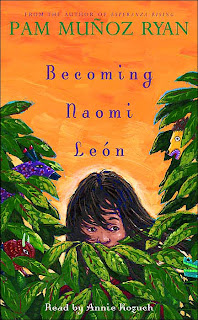
“Becoming Naomi León,” by Pam Munoz Ryan

“Becoming Naomi León,” by Pam Munoz Ryan is a novel about a young girl whose life changes when her mother comes back to claim her seven years after abandoning her with her grandmother.
Book Cover Art for Becoming Naomi Leon by Pam Munoz Ryan
Naomi Soledad Leon Outlaw, and her little brother Owen have lived with their grandma for most of their lives. They barely remember their mother, Terry, who abandoned them years ago to run off with one of her boyfriends. Needless to say Naomi is surprised when her mother returns one day.

Terry bursts into their lives with nice gifts and nice talk, but Naomi doesn't trust her. She may have changed her name from Terry to Skyla, but her personality hasn't changed much. Skyla wants to take Naomi, but she doesn't like Owen because of his physical deformities. But Naomi doesn't want to leave either her grandmother or her brother, especially if it means being with her mother, whose fickle moods and frequent threats are slightly frightening.

But Skyla has the law on her side, because Naomi and Owen are still her children, so she can probably take them away from their grandmother legally. There is only one option available. Naomi, Owen, and their grandmother set off on a road trip to Mexico, where they hope to find the children's father. All they know about him is that he is a master carver, that he sends large checks marked with no return address, and that at one time he wanted both Naomi and Owen.

“Becoming Naomi León” is an excellent novel. Pam Munoz Ryan has created some wonderfully memorable main characters. Naomi starts off shy and quiet, but during the trip to Mexico she gains confidence in herself and learns to speak up for herself. Even Skyla, Naomi's mother, is portrayed with both positive and negative sides. Pam Munoz Ryan shows that Skyla wants to be a good parent in some respects, but she is simply too immature. The contrast between Skyla and Naomi is striking and makes “Becoming Naomi Leon” a fascinating book. I highly recommend it to all young readers.

Inkweaver Book Rating:

Plot

Characters

Presentation

Overall

Inkweaver Review 2009-04-05T09:59:00-05:00

“The Last Holiday Concert,” by Andrew Clements

“The Last Holiday Concert,” by Andrew Clements is the story of an easygoing young boy who suddenly finds himself in charge of the upcoming holiday concert at his school.

Book Cover Art for The Last Holiday Concert by Andrew ClementsHart Evans has always been one of the coolest kids at his school. Even Hart's name itself is cool, so it is little wonder that coolness comes naturally for him. Hart's friendly attitude and pleasant nature make him everybody's friend. There is only one thing that Hart doesn't like, and that's chorus, organized by Mr. Meinert. Andrew Clements explains Hart's feelings with regard to chorus.

“Hart was sure that Mr. Meinert had designed the entire chorus experience so it would be as awkward and annoying and uncomfortable as humanly possible. Chorus simply was not cool, not one bit of it, which meant that chorus cramped Hart's style in the worst possible way.

Because at one end of the Palmer School universe there was Hart and his slowly rotating galaxy of ultimate coolness. Then way, way down at the other end of time and space, past all the stars and moons, and planets, there was Mr. Meinert, singing his head off somewhere inside a very uncool black hole.”

When Hart goofs off in chorus class and accidentally shoots Mr. Meinert with a rubber band his teacher looses control and drags him to the office. Hart gets a couple days of detention, but other than that he manages to avoid any serious punishment. However, for Mr. Meinert this is the last straw.

In a rather dramatic scene Mr. Meinert tells the class that since they obviously don't want to take him seriously, then they can just run the concert themselves, pick their own songs, and practice them or don't practice them whatever way they want. Then Mr. Meinert pushes his desk to the side of the room and tells the children: “Have a nice concert.”

At first the children are shocked, and can't believe that Mr. Meinert is serious. Soon however, they realize that Mr. Meinert really has given up. Some of the children decide that chorus should now be a free period where everyone can goof off and have fun. However, the children quickly realize that when the holiday concert night finally arrives they have to have something prepared so they don't end up embarrassed in front of their parents and the other students.

After a brief election the results are announced: the children have decided that Hart Evans will be their leader and help them get the concert organized. But can Hart handle the responsibility? More importantly can he organize a good concert and still manage to keep his good reputation?

“The Last Holiday Concert” does a good job of exploring the contrast between leadership and popularity. Andrew Clements shows how Hart has to walk a very fine line to keep the respect of his fellow classmates and at the same time make sure that the holiday concert is a success. As always Andrew Clement's characters are amazing. He manages to put a surprising amount of depth into his depictions of school age children.

“The Last Holiday Concert” is another great Andrew Clements book for young readers.

Inkweaver Book Rating:

Plot

Characters

Presentation

★★★★★Overall

Inkweaver Review 2009-04-03T11:23:00-05:00

“Snow Falling in Spring,” by Moying Li

“Snow Falling in Spring,” is a historical biography by Moying Li, about her life growing up during the tumultuous Chinese Cultural Revolution.
Book Cover Art for Snow Falling in Spring by Moying Li
Moying Li begins her book with a description of her innocent childhood before the Cultural Revolution, playing in the courtyard of her family home with her friends and the family pets. Then she describes the beginning of the Cultural Revolution and its first manifestation in her childhood world: a large furnace for producing iron and steel. This furnace was erected in the courtyard where she liked to play.

During the Cultural Revolution the Chinese government announced that China could catch up to Western countries in one Great Leap Forward, if every citizen worked hard to increase the output of goods, food, etc. The Chinese eagerly embraced this bold plan. Moying Li describes how her initial apprehension about the steel furnace turned into wholehearted approval. She even went to the kitchen to pull out pots and pans to melt in the furnace. Despite the energy and enthusiasm put into the furnace project, though, the result is failure:
In the courtyard, Da Jiu and our neighbors sat on the woodpile, their heads bowed like those of defeated soldiers. The fire in the furnace had died, leaving a lingering smell of burned wood.

“What happened, Da Jiu?”

“The iron and steel we made was not good enough.” He sighed. I stared at him in disbelief. “We simply did not know enough to make it right,” he added.

Now I was sad, too. Climbing up the woodpile to sit next to him, I leaned my head against his shoulder, as crestfallen as he and our neighbors.

“But we tried so hard.”

“Yes,” he said. “We did.”
The failure of the furnace sets the tone for much of the rest of “Snow Falling in Spring.” Although the Cultural Revolution had grand goals, carrying out the plans was more difficult than it seemed and often had unanticipated results. For example, Moying Li mentions another government plan: to eliminate the sparrow. The idea was that this small bird ate seeds and crops, so by killing off the species in China food production would be boosted. Although the war against sparrows was highly successful and millions were killed, the next year saw crop failure as insects that would have normally been kept in check by the sparrows ravaged the fields.

Perhaps the most memorable statement in “Snow Falling in Spring” is found at the beginning of the fourth chapter.

Most people cannot remember when their childhood ended. I, on the other hand, have a crystal clear memory of the moment. It happened one night, in the summer of 1966, when my elementary school headmaster hanged himself.

Moying Li starts by describing her early days in school. She paints a vivid picture of caring, fun loving, teachers and interesting assignments that kept her busy and happy. But the atmosphere in Moying Li's school changed when the Red Guard movement began to gain momentum. Basically the Red Guard was a vast student group that developed as a backlash movement in response to Western ideology being taught in Chinese schools. The Red Guard felt that much of the instruction in Chinese schools was really propaganda designed to corrupt Eastern minds and turn young students away from Communism, toward Democracy. Whether this was the case or not, the Red Guard made it their job to expose school officials that they felt were not showing enough support for the Communist government.

Moying Li does an excellent job of showing the steps that led the Red Guard from watchdog status to full fledged militant terrorism. Then she shows how Red Guard violence touched people progressively closer to her, first her favorite teachers, then the school headmaster, and finally her own family.

While reading “Snow Falling in Spring” I felt that Moying Li has a very balanced approach in her discussion of the Cultural Revolution. Although she depicts the Red Guard as a violent group to be feared, she also shows how the people who were part of it were not necessarily evil. Moying Li and her family put forth their best effort with the furnace because they were eager to help their country. Likewise, the people who were part of the Red Guard were swept along by a spirit of nationalism and love of country. In one passage Moying Li is talking with a girl who was part of the Red Guard.
“I know how Lan must have felt,” Lee said, avoiding my eyes, “with her blood rushing and her heart pounding fast. At the time I did believe that our headmaster was an enemy of the people and that by teaching him a lesson we were defending Chairman Mao.”

After a long pause, Lee continued, lowering her head. “Now, after living here on this desolate mountain for so long, I'm not sure of anything.”
During the Chinese cultural revolution everyone was eager to do their best, eager to help the country. But one of the main messages of “Snow Falling in Spring” is, I think, that good intentions don't mean that you are doing the right thing. Just like the furnace attempt failed, and the sparrow extermination had negative results, likewise the Red Guard did damage to China rather than helping it. On the one hand the goal of the Great Leap Forward was to make China similar to Western countries. But how could the Chinese people learn to be like Western countries, unless they learned Western ways? The Red Guard wanted to protect the Chinese culture from being subdued by Western culture. In this respect they succeeded, but they also destroyed books and literature and killed and imprisoned the very ones that would have taught them the things they wanted to know.

“Snow Falling in Spring” is very well written. In addition to supplying historical facts, Moying Li explains the forces behind the Cultural Revolution from her firsthand viewpoint. The balanced historical elements of “Snow Falling in Spring” make it a book that I highly recommend for its educational and cultural value.

Inkweaver Review 2009-04-02T10:33:00-05:00

“Trigger,” by Susan Vaught

Book Cover Art for Trigger by Susan Vaught“Trigger,” by Susan Vaught is a novel about a teenage boy with brain damage from a suicide attempt that he can no longer remember.

When Jersey Hatch is finally released from Carter Brain Injury Center the psychiatrists and therapists there have taught him to walk, read, and write, but they still can't completely prepare him for his return to the real world. Nearly a year ago Jersey tried to kill himself by shooting himself in the head with a gun. Fortunately he was found in time for doctors to operate and save his life, but the suicide attempt erased a year of memory from Jersey's mind and left him with partial paralysis and brain damage.

Inkweaver Review is moving to a new web address. Please read the rest of this review at its new location:

Review of "Trigger" by Susan Vaught
Inkweaver Review 2009-04-01T11:20:00-05:00